Showing posts with label Nauta. Show all posts

Thursday, February 7, 2013

Needs of the Jungle People


The jungle people live very modestly according to their traditional, indigenous roots.  They live in houses constructed of wood with grass or dried palm roofs.  They don’t have much, so they stick to farming, fishing, and logging.  Because they mostly abide by traditional beliefs, healthcare behaviors are very difficult to change and newly implement in the region.
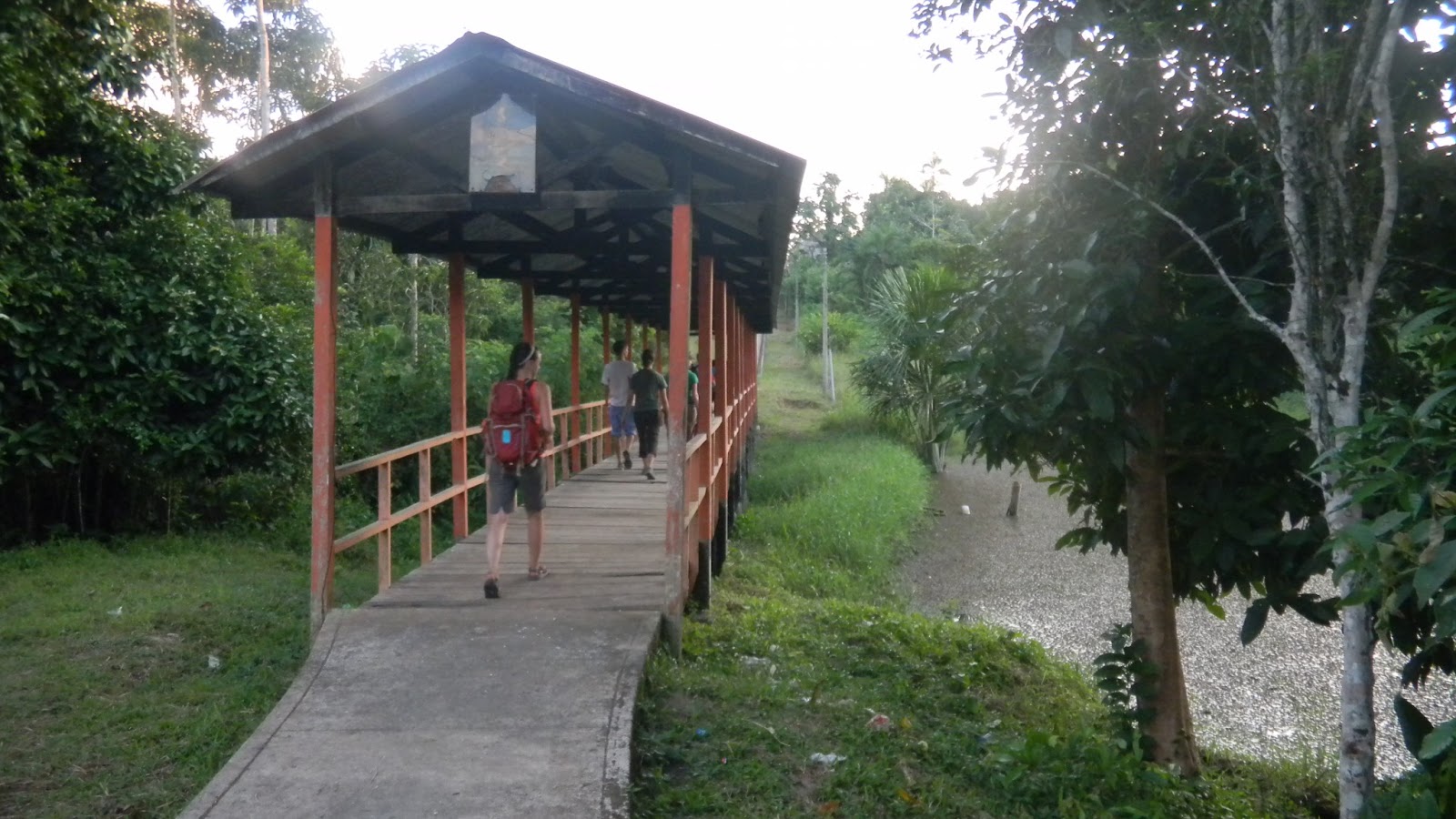

The general infrastructure is practically non-existent, however, each village has a ‘chief’ or mayor that is in charge which provides some sense of communal direction.  The rural villages aren’t usually large enough to have roads or bridges or anything, but many do have cement walkways which were funded by the Peruvian government as part of an initiative to develop the jungle.  When you get to larger jungle cities like Nauta or Iquitos there are paved roads, dirt roads, wood and metal bridges, cars and mototaxis, and Iquitos even has an airport which was previously used by the Peruvian military.  Only in really large jungle villages there is likely to be a single building with plumbing of some sort, but generally, they don’t have running water or sewage and just use river water and a latrine.  In Iquitos and Nauta there is plumbing, but the standards are very low in comparison to American plumbing standards.  The same goes for electricity.  In the rural jungle, the government has funded the strategic placement of lights and generators, but because of funds, the villages are only able to use the electric on a very minimal basis (ie: at night for an hour or so).  Iquitos and Nauta have electricity and even have energy generating electric plants powered mostly by burning wood from the surrounding rainforest. 


The medical infrastructure in the jungle is virtually non-existent except for a select few international, non-profit organizations.  In a region of a poor country where disease, parasites, malnutrition, rampant tooth decay, and premature death are normalcy, medical care is a true necessity.  Children are who suffer the most and many are left alone to survive on the streets or in the jungle with no parent or family unit to provide care.  Many countries have healthcare workers that man health posts, but in the Peruvian jungle, such government-run health posts are run much like their rural school systems; there is a physical building, but the people are rarely there, medical supplies are largely not stocked, and people’s limited healthcare knowledge prevents a belief in medicine and encourages their beliefs in “curses.”  Larger cities like Iquitos are the only places in the jungle that have actual hospitals and reliable doctors with stocked medications and vaccinations.  However, from the experience of a past team member, the hospital in Iquitos doesn't even have running water which is a major public health concern.


The ultimate goal for the region is really to shift their focus from living traditionally to living sustainably so they can ultimately provide for themselves and meet their own needs.  This is where the church comes in.  Planting the seeds of spiritual growth is a foundational part of church focus.  Healing, teaching, feeding, and loving the people of Peru are the fertilizers for the seeds of spiritual growth.  All of the help given may make a difference for a lifetime and may impact thousands on a humanitarian level, but the power of God makes a difference that will reach into eternity.


Monday, January 14, 2013

A Little Peruvian History


Peru is a South American country that is bordered by Ecuador and Colombia in the north, east by Brazil, and south by Bolivia and Chile.  Before being settled by Francisco Pizarro and other Spanish settlers in the early 16th century, the country was home to some of the oldest untouched ancient civilizations.  The Incan Empire occupied much of the South American countries surrounding the Andean mountain ranges, although much of its history can be seen in Peru.  Remains can be seen in Cuzco and most notably at Machu Picchu and the Nazca Lines, highlighting their ingenious knowledge of infrastructure, spirituality, and the sciences.


 Peru is what is called a representative democratic republic which has elements of both the parliamentary and presidential system of government, and is divided into 25 regions.  The country’s capital is in Lima which is on the southern coast is the most developed.  It is a beautiful city with a lot of history, and a lot of tourist attractions.  Even with such beauty, poverty can be seen on the mountainside in shanty towns.  It is estimated that the Peruvian poor that live in the urban environment have a 20% higher mortality rate.  The Lima shanty towns are rampant with cocaine and the cheaper alternative of base cocaine, and diseases there spread like wildfire.


The most notable region to me is the Loreto region, or the jungle region which containing a large portion of the Amazon basin.  This is a mostly unsettled region of the country where Iquitos, the largest jungle city, and the sixth largest city in the country.  It is nicknamed the ‘Capital of the Peruvian Amazon.’  The most notable thing about the city is that it is the largest city in the world which cannot be reached by road, only airplane or boat.  There is one road to the small town of Nauta, which is about 60 miles south.  Let me tell you, that road cannot be considered a road in American standards.  It is very rocky, hilly, and dusty, which makes carsickness common.  Yeah, not all that fun when there is a small bus packed full, hip to hip, with people.  There aren't many cars in Iquitos because of the expense of shipping them there, but they mostly use moto-taxis which are motorcycles with carts built on the back.  These are fun, but very dangerous.


Peru is considered a developing country meaning that it is relatively poor.  And it is a melting pot of ethnicities.  The first time I went to Peru I was confused because there is a ‘Chifa’ or Chinese restaurant on every street corner.  The high prevalence of ethnic groups is because they were shipped in during the rubber boom to chop down trees and work the silver and copper mines.  The major economic activities include agriculture, fishing, mining, and textiles.  Most of the men in the jungle do a lot of logging which contributes largely to the destruction of the Peruvian jungle.  Another thing that led to destruction of the jungle started during the rubber boom, the Amazon was one place natural rubber grew. 


Peru is 496, 225 square miles of beauty.  It contains the Andean mountain region which defines the regions of coastal, mountain, and jungle.  This is what gives the country varying climates which varies from tropical in the jungle to desert in the west. 

The official languages include Spanish and Quechua.  Quechua is more of a jungle language and one that was spoken by the ancient Incas.  There are also a variety of other jungle and rural languages that are spoken. 


Ok that is about all the information that I could quickly put together into one post.  Stay tuned for more information about the people, travels, and research.