
The jungle people live very modestly according to their
traditional, indigenous roots. They live
in houses constructed of wood with grass or dried palm roofs. They don’t have much, so they stick to farming,
fishing, and logging. Because they
mostly abide by traditional beliefs, healthcare behaviors are very difficult to
change and newly implement in the region.
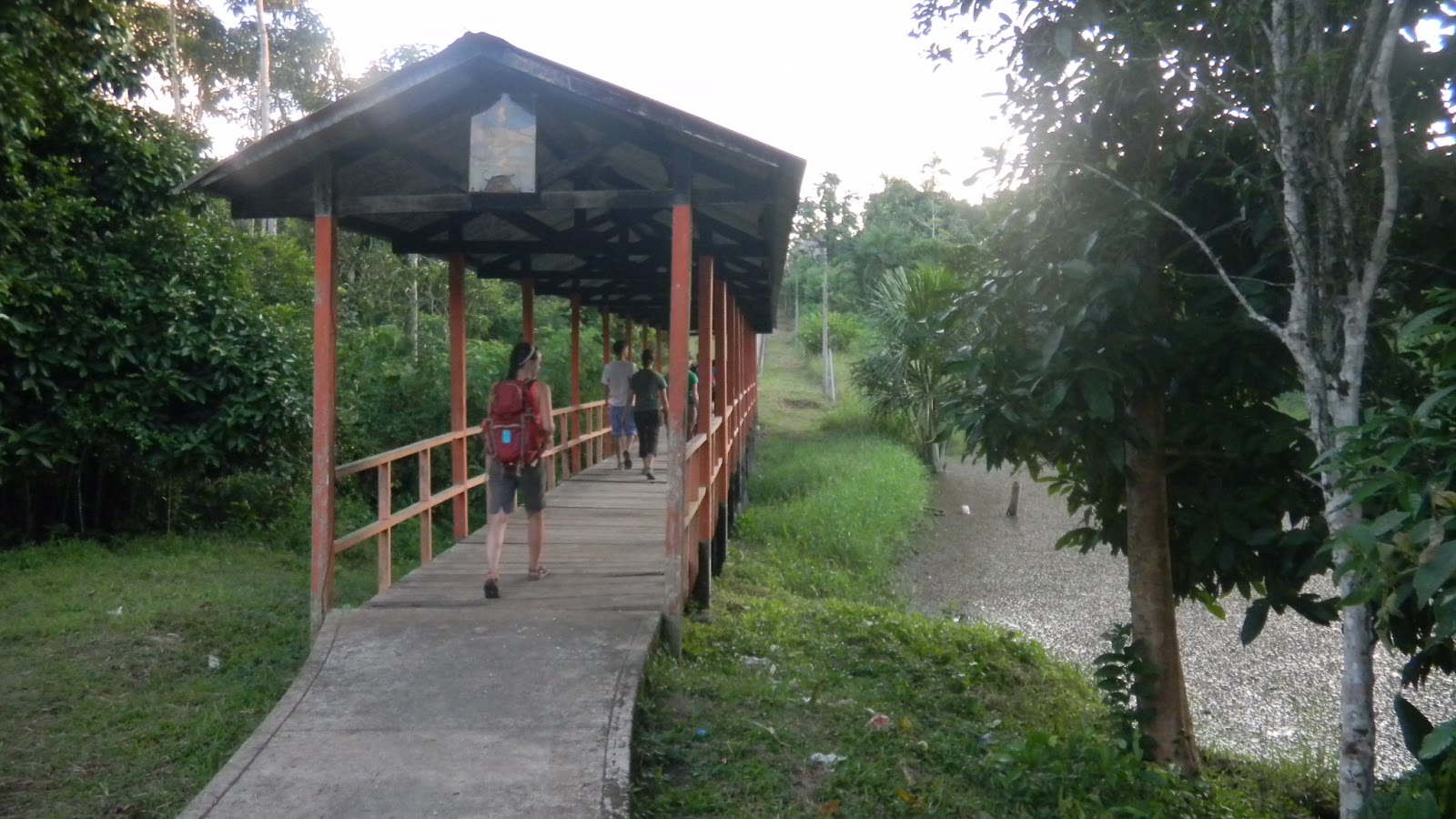 The general infrastructure is practically non-existent,
however, each village has a ‘chief’ or mayor that is in charge which provides
some sense of communal direction. The
rural villages aren’t usually large enough to have roads or bridges or
anything, but many do have cement walkways which were funded by the Peruvian
government as part of an initiative to develop the jungle. When you get to larger jungle cities like
Nauta or Iquitos there are paved roads, dirt roads, wood and metal bridges, cars
and mototaxis, and Iquitos even has an airport which was previously used by the
Peruvian military. Only in really large
jungle villages there is likely to be a single building with plumbing of some
sort, but generally, they don’t have running water or sewage and just use river
water and a latrine. In Iquitos and
Nauta there is plumbing, but the standards are very low in comparison to
American plumbing standards. The same goes for electricity. In the rural jungle, the government has funded the strategic placement of lights and generators, but because of funds, the villages are only able to use the electric on a very minimal basis (ie: at night for an hour or so). Iquitos and Nauta have electricity and even have energy generating electric plants powered mostly by burning wood from the surrounding rainforest.
The general infrastructure is practically non-existent,
however, each village has a ‘chief’ or mayor that is in charge which provides
some sense of communal direction. The
rural villages aren’t usually large enough to have roads or bridges or
anything, but many do have cement walkways which were funded by the Peruvian
government as part of an initiative to develop the jungle. When you get to larger jungle cities like
Nauta or Iquitos there are paved roads, dirt roads, wood and metal bridges, cars
and mototaxis, and Iquitos even has an airport which was previously used by the
Peruvian military. Only in really large
jungle villages there is likely to be a single building with plumbing of some
sort, but generally, they don’t have running water or sewage and just use river
water and a latrine. In Iquitos and
Nauta there is plumbing, but the standards are very low in comparison to
American plumbing standards. The same goes for electricity. In the rural jungle, the government has funded the strategic placement of lights and generators, but because of funds, the villages are only able to use the electric on a very minimal basis (ie: at night for an hour or so). Iquitos and Nauta have electricity and even have energy generating electric plants powered mostly by burning wood from the surrounding rainforest.  The medical infrastructure in the jungle is virtually
non-existent except for a select few international, non-profit organizations. In a region of a poor country where disease,
parasites, malnutrition, rampant tooth decay, and premature death are normalcy,
medical care is a true necessity. Children
are who suffer the most and many are left alone to survive on the streets or in
the jungle with no parent or family unit to provide care. Many countries have healthcare workers that man
health posts, but in the Peruvian jungle, such government-run health posts are
run much like their rural school systems; there is a physical building, but the
people are rarely there, medical supplies are largely not stocked, and people’s
limited healthcare knowledge prevents a belief in medicine and encourages their
beliefs in “curses.” Larger cities like
Iquitos are the only places in the jungle that have actual hospitals and
reliable doctors with stocked medications and vaccinations. However, from the experience of a past team
member, the hospital in Iquitos doesn't even have running water which is a
major public health concern.
The medical infrastructure in the jungle is virtually
non-existent except for a select few international, non-profit organizations. In a region of a poor country where disease,
parasites, malnutrition, rampant tooth decay, and premature death are normalcy,
medical care is a true necessity. Children
are who suffer the most and many are left alone to survive on the streets or in
the jungle with no parent or family unit to provide care. Many countries have healthcare workers that man
health posts, but in the Peruvian jungle, such government-run health posts are
run much like their rural school systems; there is a physical building, but the
people are rarely there, medical supplies are largely not stocked, and people’s
limited healthcare knowledge prevents a belief in medicine and encourages their
beliefs in “curses.” Larger cities like
Iquitos are the only places in the jungle that have actual hospitals and
reliable doctors with stocked medications and vaccinations. However, from the experience of a past team
member, the hospital in Iquitos doesn't even have running water which is a
major public health concern.
The ultimate goal for the region is really to shift their
focus from living traditionally to living sustainably so they can ultimately
provide for themselves and meet their own needs. This is where the church comes in. Planting
the seeds of spiritual growth is a foundational part of church focus. Healing, teaching, feeding, and loving the
people of Peru are the fertilizers for the seeds of spiritual growth. All of the help given may make a difference
for a lifetime and may impact thousands on a humanitarian level, but the power
of God makes a difference that will reach into eternity.


